Echoes of Creation: AI's Hidden Role in Music Innovation
- Jan 31, 2025
- 4 min read
Updated: Apr 1

The Muse in the Machine: How AI Redefines the Role of the Modern Musician
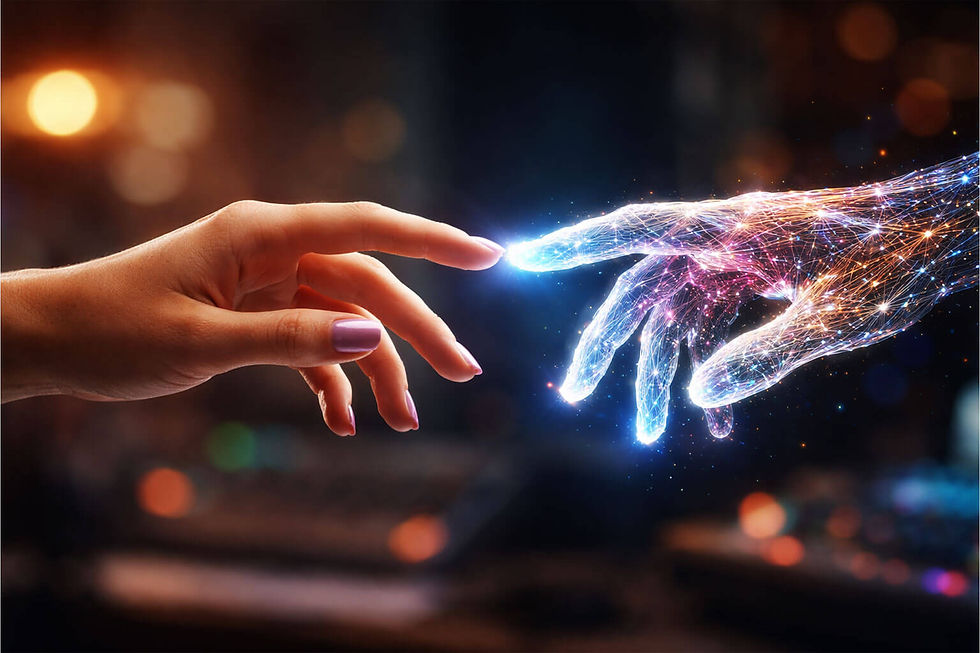
In the shadowy realm where creativity intertwines with technology, a quiet revolution is unfolding. Inside dimly lit studios and humming servers, musicians and artificial intelligence are forging an enigmatic relationship. The question is no longer if technology influences art it always has but how AI, with its capacity for imitation and innovation, is redefining the role of the modern musician. Is AI an inspiring muse, a mere tool, or a formidable rival ? As the lines between creator and creation blur, the implications for artistry and identity grow ever more profound. From AI music platforms to the broader impact of AI in music creation, this transformation is reshaping the industry in profound ways.
Tools of the Trade: A Historical Perspective
From the hammered strings of the first pianos to the intricate digital interfaces of contemporary synthesizers, musical instruments have continually influenced the creation of music. Technological innovations, such as the phonograph (which revolutionized sound recording in the late 19th century), the electric guitar (which transformed popular music in the 20th century), and digital audio workstations (DAWs), which offer extensive editing capabilities, have prompted musicians to adapt and evolve their creative processes.
However, artificial intelligence (AI) introduces a groundbreaking dimension to music creation: autonomy. AI systems can analyze large amounts of data to generate melodies, harmonize chords, and compose entire symphonies with varying degrees of human guidance, such as providing prompts, curating content, or refining the output. This technological shift raises a critical question for artists and creators: Are we the primary creators of music, or are we becoming collaborators with our own inventions, relying on AI to explore new artistic possibilities?
Collaboration in Practice: The Musician and the Machine
AI in Music Creation: Collaboration in Practice
AI is no longer a futuristic concept; it is actively shaping music creation today. Consider a few real-world examples:
Case Study 1: A composer working on a film score might turn to tools like Amper Music or AIVA. These AI platforms can generate orchestral arrangements in minutes, offering suggestions that help break creative blocks and inspire new directions.
Case Study 2: Pop artists increasingly use AI to analyze listener preferences. Platforms like Endel create mood-based soundscapes, while others predict trends, ensuring the next big hit aligns with audience expectations.
Case Study 3: Experimental artists like Holly Herndon treat AI not as a passive tool but as an active collaborator. Her AI “Spawn” generates vocal arrangements, pushing the boundaries of what the human voice can achieve in a digital age.
These collaborations highlight the innovation AI brings to music creation. From generating novel ideas to expanding creative boundaries, AI and music creativity are becoming inseparable.
The Muse or the Rival ?
At its core, music is a deeply human endeavor, an expression of emotion, culture, and identity. Yet AI is beginning to challenge this notion. In competitions, AI-composed pieces have been mistaken for human creations. Algorithms like OpenAI’s Jukebox can emulate the styles of iconic musicians, raising philosophical questions about the nature of creativity.
For some, AI is a tool that enhances their abilities, much like an instrument. For others, it feels like a rival, capable of composing faster and, in some cases, with comparable artistry. This tension highlights a larger concern: If machines can compose symphonies, what becomes of the human artist ? Will we become curators, directing AI to create on our behalf, or will we redefine creativity itself, integrating machine outputs as part of a new hybrid art form ?
Ethical and Artistic Implications
As AI’s role in music expands, so do the ethical and artistic dilemmas surrounding its use. One major issue is copyright ownership of songs generated by algorithms. Since AI itself cannot hold copyright, the question becomes: Who owns the rights, the programmer who created the AI, the musician who provided the input data, or another human contributor?
This dilemma becomes even more complex when AI systems recreate the voices of deceased artists, raising concerns about consent and exploitation. Furthermore, when AI-generated music closely mimics the styles of well-known artists, the line between inspiration and plagiarism becomes blurred. These challenges require a careful reevaluation of existing copyright laws and ethical guidelines to address AI’s growing influence on the creative landscape.
A Vision for the Future: Renaissance or Decline ?
The evolving relationship between musicians and AI offers both promise and peril. On one hand, AI could democratize music creation, allowing anyone to compose with the help of intuitive tools. On the other, it risks reducing music to a commodity, driven by algorithms rather than genuine expression.
In a more optimistic future, AI serves as a catalyst for a new artistic renaissance. By handling repetitive tasks and suggesting novel ideas, it frees artists to focus on the essence of their craft. Conversely, a dystopian vision looms where music becomes formulaic, and the human element the soul of art fades into obscurity. This raises critical questions about how AI is transforming music creation and what it means for the future of artistry.
Conclusion: Embracing the Muse in the Machine
AI is reshaping music creation, offering both challenges and opportunities. As the lines between human creativity and machine innovation blur, the essence of music remains rooted in the imagination of those who dare to explore new possibilities.

Comments